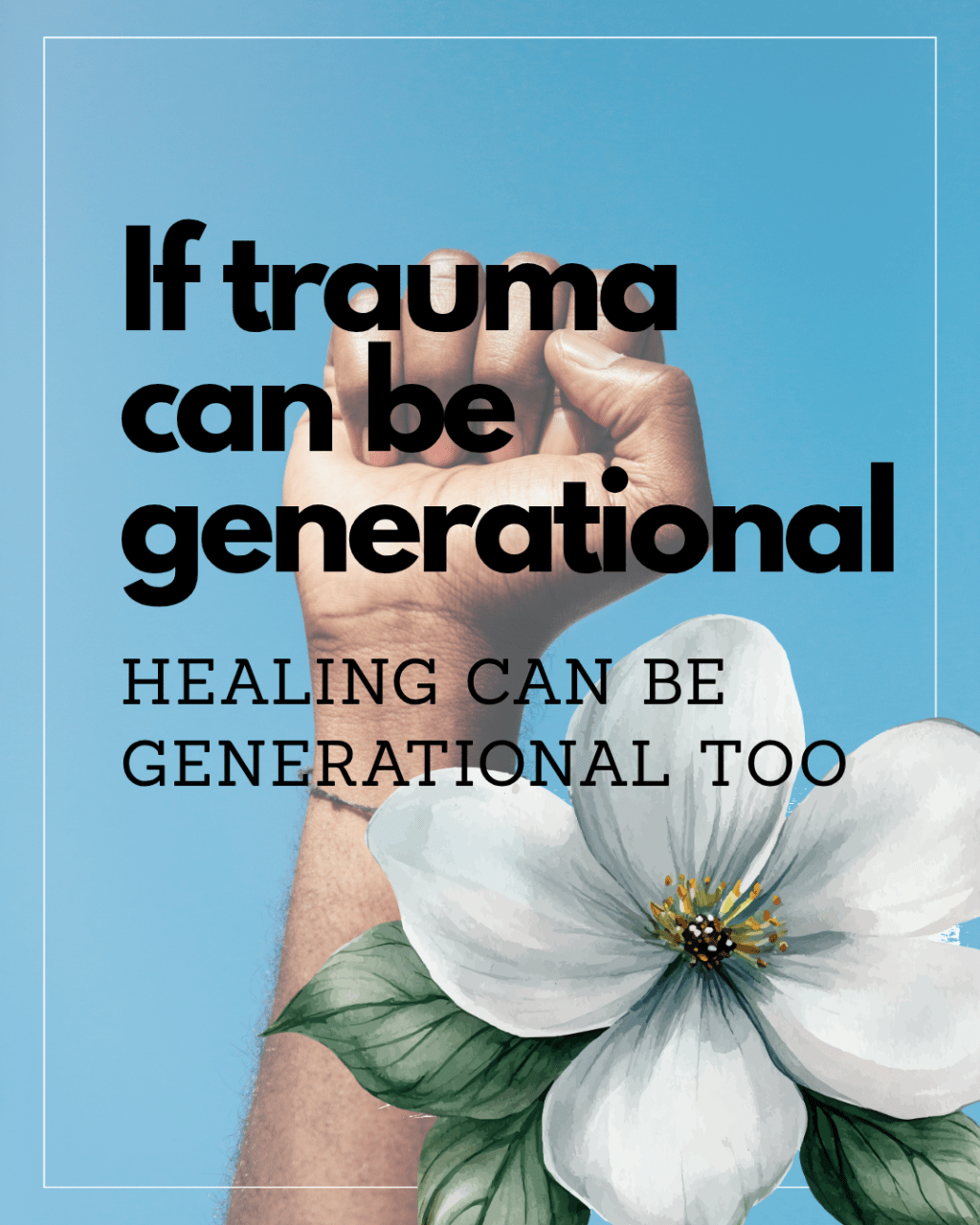
When people hear the word “trauma,” they often think of a single event: an accident, a loss, abuse, violence, or disaster. But trauma is not always confined to one moment in time. Sometimes trauma is carried quietly across generations through survival strategies, fear, silence, hypervigilance, family dynamics, and learned beliefs about safety and worth.
This is known as generational trauma.
Generational trauma refers to the ways unresolved trauma can affect not only individuals, but also families and communities over time. Research has shown that chronic stress and trauma can influence emotional regulation, attachment patterns, stress responses, and even physical health across generations (Yehuda & Lehrner, 2018).
People may notice generational patterns such as:
- Difficulty expressing emotions
- Fear of vulnerability
- Hyper-independence
- Anxiety surrounding financial or physical safety
- Parentification and over-responsibility
- Distrust of systems or authority
- Survival-based beliefs like “rest is laziness” or “your value comes from productivity”
Often, these patterns did not appear without reason. Many began as adaptations to environments where survival genuinely depended on vigilance, sacrifice, silence, or emotional suppression.
In Texas especially, Juneteenth this week offers an important reminder that trauma does not occur in isolation from history. Juneteenth commemorates June 19, 1865, when enslaved people in Texas were finally informed of their freedom more than two years after the Emancipation Proclamation had been issued. The effects of slavery, racial violence, systemic inequality, displacement, and generational survival strategies did not simply disappear after emancipation. Historical trauma continues to shape individuals, families, and communities today.
Acknowledging generational trauma is not about assigning blame to previous generations. In many cases, our parents, grandparents, and ancestors were doing the best they could with the resources, knowledge, and circumstances available to them. Survival strategies that once protected people can later become sources of emotional pain, disconnection, or rigidity when passed forward without reflection.
Healing generational trauma often begins with awareness.
It may look like:
- Learning emotional regulation skills that were never modeled
- Setting boundaries without overwhelming guilt
- Allowing rest without equating it with failure
- Challenging harmful beliefs about worth and productivity
- Creating healthier communication patterns
- Developing safety in relationships
- Grieving what was normalized but still harmful
Healing does not mean erasing the past or pretending painful histories did not happen. It means recognizing that survival patterns developed for a reason while also asking whether those patterns are still serving us now.
Many people grow up believing they simply “are the problem,” without realizing they inherited systems of coping shaped long before they were born.
Awareness creates choice. And choice creates the possibility for change.
References
American Psychological Association. (2019). Stress effects on the body. American Psychological Association.
Yehuda, R., & Lehrner, A. (2018). Intergenerational transmission of trauma effects: Putative role of epigenetic mechanisms. World Psychiatry, 17(3), 243–257. https://doi.org/10.1002/wps.20568
 Therapy with Hannah C
Leave a comment